Closet Conservation & Material Care · November 12, 2026 · 8 min read
Learn museum-grade closet conservation methods for storing box calf, lambskin, and aniline leather handbags beside solid 14k gold and lab-grown diamond jewelry without surface scratches, tarnish, or humidity damage.
Specialist Summary
Key Conservation & Craft Principles
- 01Diamond edges (10 on the Mohs hardness scale) and 14k gold clasps score unprotected lambskin, box calf, and palladium bag hardware on contact.
- 02Maintain dressing-room relative humidity between 40% and 50%; Colorado winter air below 25% RH accelerates micro-cracking in both leather piping and bench upholstery.
- 03Never store fine leather inside sealed vinyl or plastic bins—tanned hides require breathable acid-free cotton flannel and structured acid-free stuffing.
- 04Separate dressing islands into distinct leather-landing zones and suede-lined fine-jewelry trays so rings and bracelets never brush leather grain.
Why Walk-In Dressing Rooms Quietly Damage Fine Leather
In custom walk-in closets across Denver, Cherry Creek, and the Front Range, two of a homeowner's most prized material collections share the exact same center island: structured leather goods—including handbags, leather-wrapped drawer fronts, and upholstered dressing ottomans—and daily fine jewelry. While glass-topped islands look serene, hurry during morning or evening dressing routines routinely brings metal prongs, box clasps, and gemstone facets into direct friction with delicate leather topcoats.
Just as we see during onsite leather furniture care and preventative maintenance, surface wear rarely comes from a single dramatic accident. Instead, repeated micro-abrasions breach the clear protective urethane or aniline finish first, exposing underlying pigment and collagen fibers to skin oils, hand lotion, and dry mountain air.
The Physics of Hardness: Diamonds, 14k Gold & Delicate Topcoats
Understanding material hardness explains why closet zoning matters so much. Smooth lambskin, buttery Nappa, and glazed box calf owe their supple hand feel to ultra-thin finishes measured in microns. By contrast, solid 14k gold alloys and diamond pavé settings act like microscopic cutting tools whenever a handbag is set down beside an unlatched bracelet or ring on a marble or leather-inlaid countertop.
Even low-profile, everyday fine jewelry—such as solid 14k gold lab-grown diamond tennis bracelets or eternity bands—should land immediately in dedicated, microsuede-lined Valet compartments rather than resting loose on a leather bench or tray edge. Collectors curating modern heirloom pieces from Viviour often pair modular velvet drawer inserts with proper wrist-fit sizing from Viviour's jewelry sizing and care tools so clasps sit flush against the wrist and never snag handbag handles or stitched piping while carried.
- Remove pavé rings and hinged bracelets before conditioning leather or tucking dust-bag drawstrings around hardware.
- Wrap chain straps inside acid-free tissue or cotton pouches and tuck them inside the bag body—never draped across exterior calfskin.
- Use felt-footed acrylic or walnut dividers so structured totes stand upright without leaning into neighboring turnlocks.
Off-Gassing, Tannins & Chemical Cross-Reactions in Closed Cabinetry
Physical scratching is only half of the conservation equation; enclosed cabinetry creates microclimates where chemical off-gassing matters. Vegetable-tanned leathers, cedar shelving, and certain dyed suede linings release organic acids and sulfur compounds over time. While solid 14k gold and diamonds resist tarnish far better than sterling silver, trapped vapors combined with trapped moisture can dull brass or palladium handbag turnlocks and dry out leather binders.
Give every shelf breathing room. Avoid airtight acrylic boxes unless they incorporate passive ventilation slots, and keep silicone-heavy polishes, perfume atomizers, and alcohol-based jewelry cleaners well away from leather surfaces—one stray mist of isopropyl alcohol or ammonia dissolves protective leather finishes instantly.
When Closet Seating or Leather Surfaces Need Professional Care
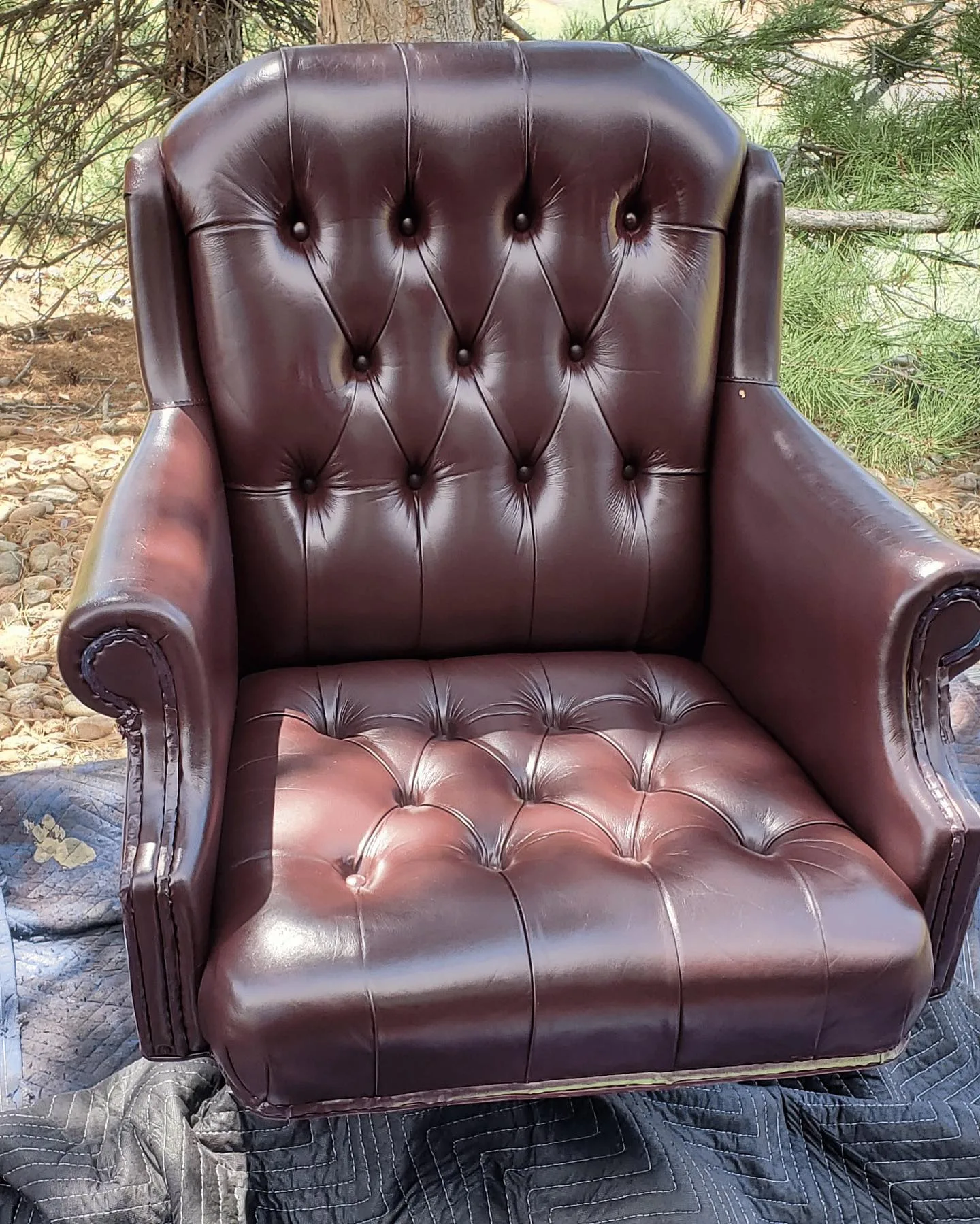
Routine dusting with a clean, dry microfiber cloth and pH-balanced leather protection—available through our curated leather care store—preserves intact finishes for years. However, when a dressing-room ottoman, leather bench, or heirloom lounge chair develops ring-prong gouges, hand-cream darkening, or finish flaking, household balms cannot rebuild a breached topcoat.
At Luxury Leather Restoration, Michael brings over 20 years of onsite color-matching and finish-rebuilding craft directly to your home. Explore our professional leather cleaning and onsite leather restoration services, or request a free virtual or in-home evaluation to preserve the leather pieces anchor-styling your space.
Technical Q&A
Straightforward specialist answers on material conservation, onsite restoration, and long-term care.
Further Reading & Services
Related Conservation & Atelier Guides
Pet-Friendly Leather Preservation
How to Protect Aniline Leather Sofas & Exotic Auto Interiors When Living and Traveling With Dogs
Practical technician advice for protecting Italian aniline leather sofas, semi-aniline sectionals, and luxury car interiors from dog claws, body oils, and mud—plus when onsite leather repair restores pet damage.
Bespoke Trade & Atelier Operations
Modernizing a Bespoke Restoration Atelier: Digital Quote Intake, 24/7 AI Concierge & Workshop Tax Deductions
How master restoration specialists, mobile upholstery ateliers, and specialty home-service craftsmen modernize photo quote intake, capture leads 24/7 with AI reception, and optimize S-Corp equipment and vehicle tax deductions in 2026.
Onsite Across the Front Range
Explore Core Leather Services
More than 20 years of hands-on restoration, repair, cleaning, preventative maintenance, and facilitated full reupholstery.
Start with clarity
A virtual or in-home evaluation gives Michael the opportunity to examine the leather, understand the damage, and explain the restoration options that best fit the piece and your goals.
Share a few details about your furniture and the condition you would like Michael to review.