Leather Couch Cleaning Without Damage
How to Clean a Leather Couch Without Damage

A leather couch can make a living room feel warm, polished, and comfortable. But when dust, body oils, pet marks, or spills start showing, cleaning it the wrong way can cause more harm than good.
Many homeowners in Denver want to keep their leather furniture looking rich and smooth without drying it out, fading the finish, or making stains worse. The tricky part is that leather is not cleaned like fabric. It needs the right products, light moisture, and a gentle hand.
The good news is that safe leather couch cleaning is possible when you know what to check first, what to avoid, and when to bring in a trained leather specialist. Here is a practical guide to cleaning leather sofa surfaces without risking permanent damage.
What Should You Check Before Cleaning Leather?
Before using any cleaner, take a closer look at your couch. Leather can look similar from a distance, but different finishes react very differently to water, soap, heat, and stain removers.
Identify the leather finish
Most household leather couches have a protected or pigmented finish. This type is more resistant to spills and easier to clean because it has a coating over the surface.
Aniline and semi-aniline leather are more delicate. They may absorb moisture quickly, darken when wet, or show marks from products that would be safe on protected leather. If you are unsure which type you have,
professional leather furniture cleaning in Denver can help you avoid guessing.
Test any cleaner in a hidden spot
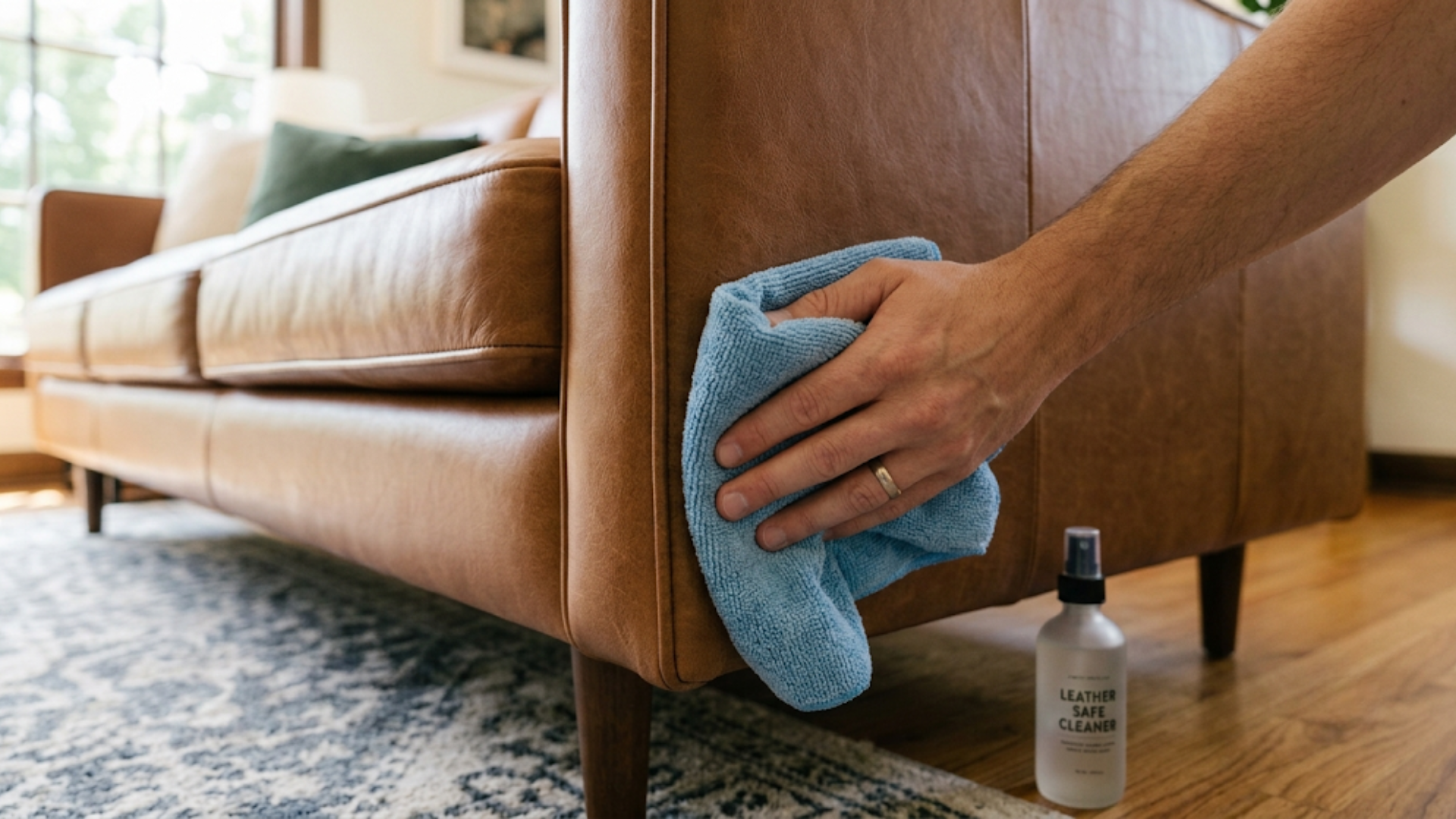
Always test first. Choose a small area behind a cushion, along the back, or near the lower side of the couch where a slight change would not be noticeable.
Apply a small amount of cleaner with a soft cloth, then wait for it to dry. If the spot becomes darker, sticky, cloudy, or rough, do not use that product on the visible areas.
What Is the Safest Way to Clean a Leather Couch?
Safe leather couch cleaning is less about scrubbing and more about patience. The goal is to lift dirt from the surface without stripping oils, damaging the finish, or pushing grime deeper into the leather.
Remove loose dust first
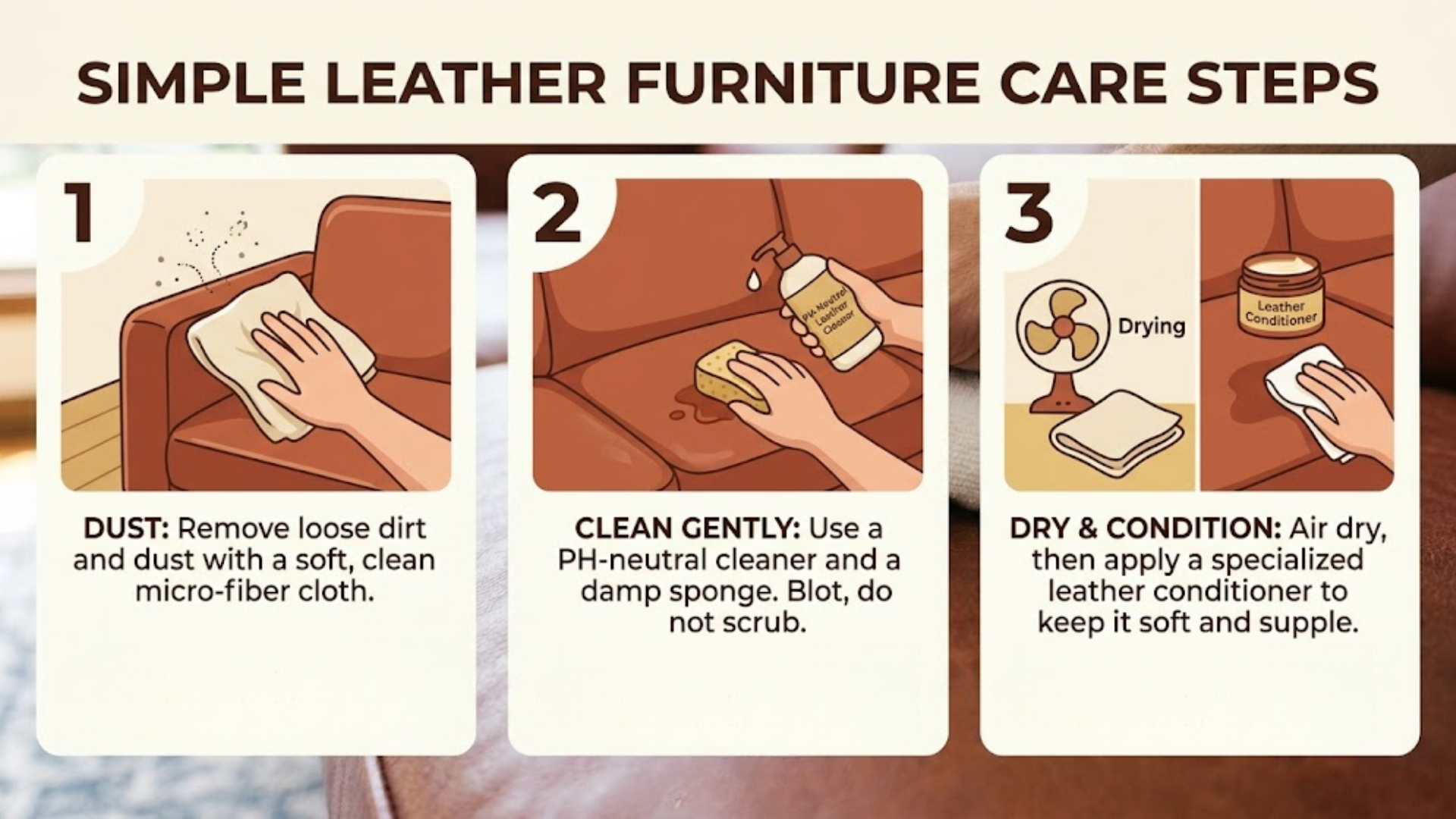
Start with a dry microfiber cloth or a vacuum using a soft brush attachment. Pay attention to seams, creases, cushion edges, and areas where crumbs or grit collect.
This step matters because dust can act like sandpaper. If you wipe a couch while gritty debris is still on the surface, you may create tiny scratches that dull the finish over time.
Use mild, leather-safe moisture
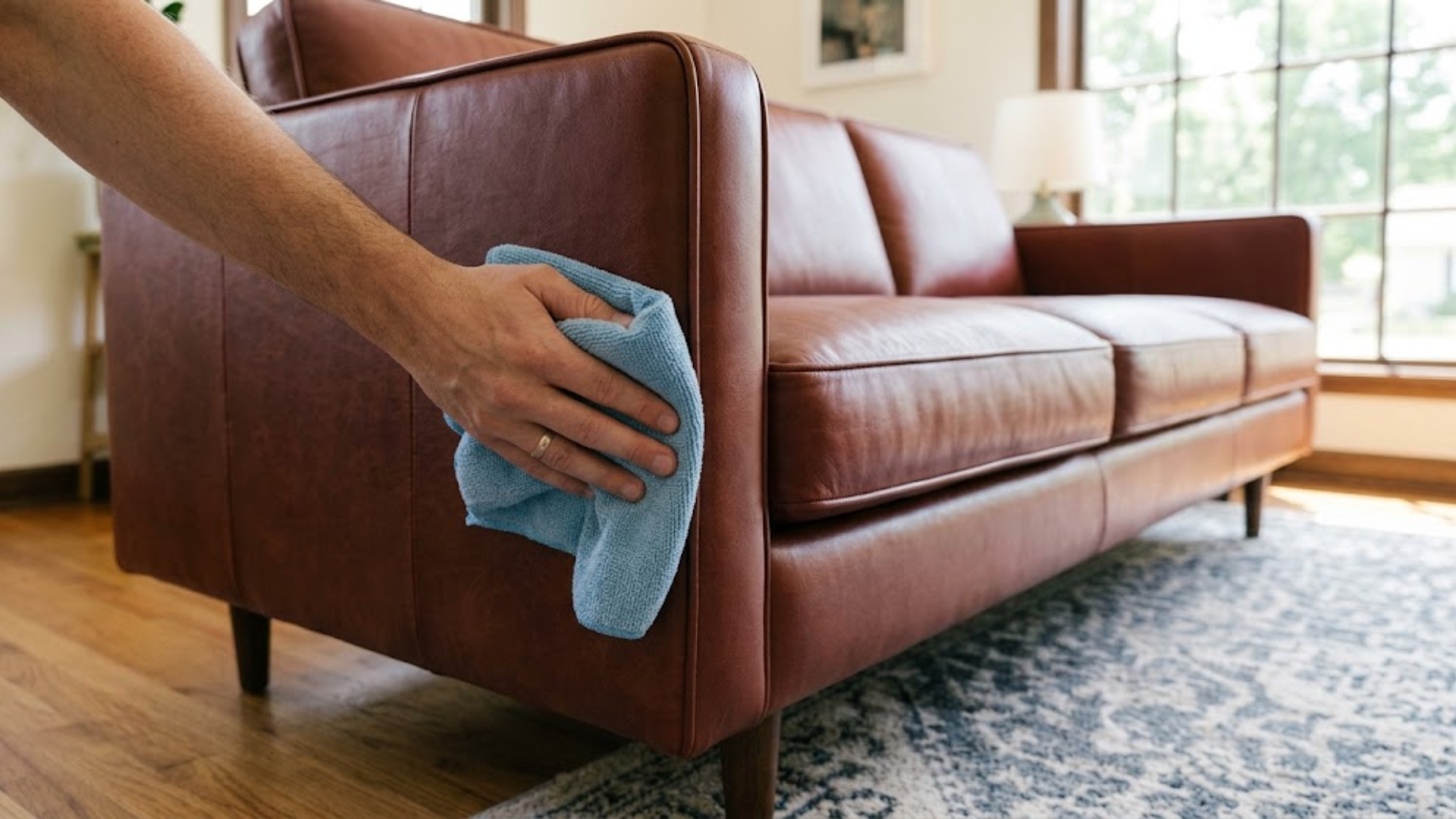
Use a leather-safe cleaner made for furniture, not automotive leather, shoes, saddles, or household surfaces. Apply the cleaner to a cloth first rather than spraying it directly onto the couch.
Wipe gently in small sections. Avoid soaking the leather. A lightly damp cloth is usually enough for cleaning leather sofa surfaces that have everyday dust, fingerprints, and light body oils.
If your couch looks dry, dull, or uneven after cleaning, leather furniture care in Denver may be a better option than repeated at-home cleaning. Over-cleaning can leave leather feeling brittle or looking patchy.
Dry and condition the surface
After cleaning, use a clean dry cloth to remove leftover moisture. Let the couch air dry away from direct sunlight, heaters, or strong airflow.
Once dry, a leather conditioner may help restore softness, but it must match the leather type. Too much conditioner can leave a greasy film, attract dirt, or darken certain finishes. Use a small amount and follow product directions carefully.
How Do You Remove Stains Without Making Them Worse?
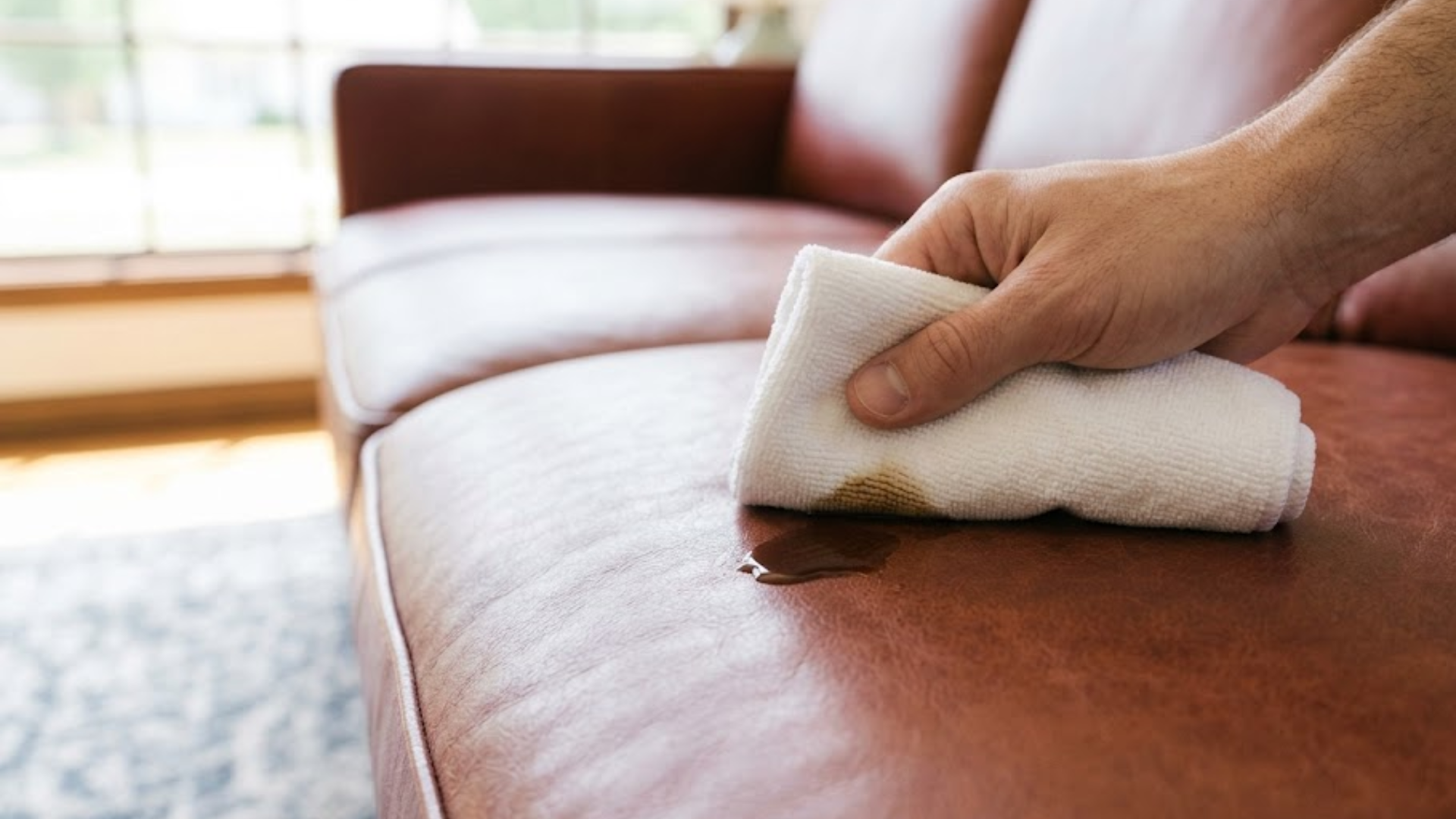
Stains removal is where many leather couches get damaged. It is easy to panic, grab a strong cleaner, and rub the area hard. That approach often spreads the stain or removes the finish around it.
Blot spills instead of rubbing
For fresh spills, blot right away with a clean absorbent cloth. Press gently and lift. Do not scrub side to side.
Water-based spills may sit on top of protected leather for a short time, but they can still settle into seams or worn spots. After blotting, clean the area lightly with a leather-safe cleaner and dry it with a soft cloth.
Treat oil, ink, and dark marks with caution
Oil, ink, dye transfer, and dark stains are harder to handle. Common home remedies like alcohol, vinegar, baking soda, nail polish remover, or magic erasers can strip color or leave a permanent dull patch.
If the stain is deep, old, or located on a highly visible area, it is safer to stop and ask for help. Leather furniture repair in Denver may be needed when a stain has already affected the finish, color layer, or texture.
Know when color transfer is the issue
Blue jeans, dark blankets, throw pillows, and pet beds can transfer dye onto light leather. This type of staining is often mistaken for dirt.
Regular cleaning may lighten the mark, but heavy dye transfer usually needs a careful process. Scrubbing can thin the protective coating and make the area more noticeable.
When Should You Call a Leather Cleaning Professional?
Some couches only need light maintenance. Others need trained care because the leather has wear, fading, dryness, cracking, or previous cleaning damage.
When the finish looks cracked, sticky, or faded
If the couch feels sticky, looks cloudy, or has cracking along the seats and arms, cleaning alone may not solve the issue. The finish may be breaking down, or oils may have built up in the surface.
In these cases, leather furniture restoration in Denver can help address deeper appearance and texture issues instead of simply wiping the surface. Restoration may be the better path when the couch has value, sentimental meaning, or a design that fits your home perfectly.
When home cleaning has already caused damage
If a cleaner left rings, streaks, rough spots, or color loss, do not continue experimenting. More products can make the damage harder to correct.
A trained leather specialist can evaluate whether the issue is surface residue, finish damage, dryness, or staining. From there, they can recommend cleaning, repair, treatment, or upholstery options based on the condition of the couch.
When the couch needs more than cleaning
Sometimes the leather is clean, but the couch still looks tired because of worn cushions, torn seams, peeling areas, or damaged panels. In that case, cleaning will not fully refresh the piece.
For nearby homeowners comparing repair and recovering options, leather furniture upholstery in Lakewood may be worth exploring if the structure is still strong but the leather surface needs more than routine care.
How Can You Keep a Leather Couch Cleaner Longer?
The best way to protect a leather couch is to make small habits part of your routine. Leather does not need constant heavy cleaning, but it does need steady care.
Dust weekly with a dry microfiber cloth. Keep the couch away from long hours of direct sun when possible, especially near large Denver windows where UV exposure can fade and dry the surface.
Wipe body oil areas more often, especially headrests, armrests, and favorite sitting spots. Use throws carefully, and avoid dark fabrics on light leather if dye transfer has been a problem.
For pets, keep nails trimmed and use a blanket in the spot where they usually rest. Small scratches and oils build up slowly, so early prevention makes a real difference.
Why Leather Couch Cleaning Matters in Denver Homes
Denver homes deal with dry air, bright sunlight, seasonal dust, and everyday family use, all of which can affect leather furniture over time. A couch that looks fine today may start showing dryness, fading, or grime in high-touch areas if it is not cared for properly. With the right leather couch cleaning routine, homeowners in Denver can protect comfort, appearance, and long-term value without risking damage from harsh products.
Learn More About Leather Couch Cleaning
Luxury Leather Restoration helps homeowners understand the right care options for their leather furniture. To learn more about leather couch cleaning, call 720-519-9622 and speak with a friendly local team about the best next step for your couch.
Frequently Asked Questions
What is the best way to clean a leather couch at home?
The safest approach is to dust first, then use a leather-safe cleaner on a soft cloth. Avoid soaking the leather or using harsh household cleaners. Always test in a hidden area before cleaning a visible section.
Can I use vinegar or dish soap on a leather sofa?
It is better to avoid vinegar, dish soap, bleach, alcohol, and all-purpose cleaners on leather furniture. These products can dry out the surface, damage the finish, or leave streaks. A cleaner made specifically for leather furniture is the safer choice.
How often should leather couch cleaning be done?
Light dusting can be done weekly, while deeper cleaning may only be needed every few months depending on use. Homes with kids, pets, or heavy daily seating may need more frequent care. Conditioning should be done only when appropriate for the leather type.
How do I remove stains from a leather couch?
Blot fresh spills right away with a clean cloth, then clean gently with a leather-safe product. Do not rub, scrub, or apply strong stain removers. For ink, oil, dye transfer, or older stains, professional help is usually safer.
When should I hire a professional for leather furniture cleaning?
Call a professional if the couch has deep stains, color loss, cracking, sticky areas, fading, or damage from a previous cleaner. A specialist can determine whether the couch needs cleaning, repair, restoration, treatment, or upholstery work.
Leather furniture can last for years when it is cleaned with care and protected from avoidable damage. If your couch needs more than a light wipe-down, Luxury Leather Restoration can help you learn the right options for your home and your leather type.